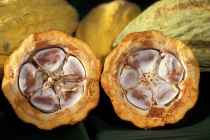
Theobroma cacao, where it grows and how it is harvested
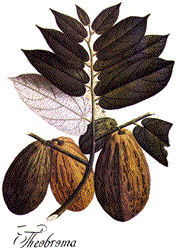
The Theobroma Cacao tree only grows in shaded tropical forests, within 20 degrees of the equator.
It grows to the size of an apple tree and starts bearing fruit in its third year.
Should all conditions remain good for the tree, it can continue to produce for another 20 years. Often, to ensure that each tree has sufficient shade, baby trees are planted by a "mother tree", which looks after them!
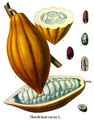
The bean of cacao grows in large pods on the tree. The tree is an evergreen, and the pods grow singly, directly on the branches and trunk attached by short stalks
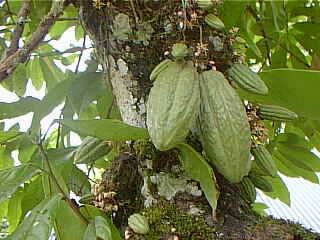
The Theobroma cacao tree's leaves are glossy and dark green and grow up to 30cms long.
The pods grow from the fertilised clusters of flowers of the Theobroma tree, known as "cauliflory".
After pollination, the flowers take 5 months to develop into the cacao pod. The pods change colour as they ripen. It is a matter of experience and skill for the grower to know when the cacoa pods are ready to be harvested.
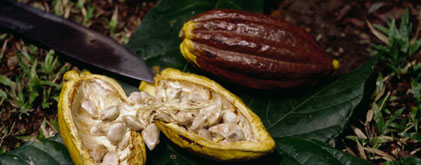
It is a simple but delicate process to cut the pods from the cacao pods, without damaging the flowers that are also on the tree. The tree flowers all year round, and those flowers represent next year's harvest. In some plantations, harvesting takes place all year round, while in other plantation locations such as in West Africa, the Theobroma cacao trees' harvesting takes place mainly from September to February.
Inside the 20cm long oval shaped pod are 20-40 beans, surrounded by a soft white pulp. By splitting the pod, you can extract the precious beans inside. Taking care to scoop out beans and the surrounding pulp, mounds of the cacao beans are placed on a mat of banana leaves, then carefully covered and left for up to 6 days. This is the first process of many, and starts the fermentation required for processing the beans.
The chemical process involved is complicated, but during this process the beans change from purple to brown, and the chocolaty smell gets stronger.
Then comes drying. For 10 to 20 days, the cacao beans are turned regularly and left to dry in the sun. This is believed to produce the best beans. Obviously, given the volume of bean production for the manufacture of chocolate, many beans are dried industrially, which some believe does not give the best results.
Not only does the divergence of fermenting and drying affect the quality of the chocolate, but there are also two distinct types of cacao tree and bean used in the manufacture of chocolate.
There is the criollo (meaning "native") and the forastero (meaning "foreign").
The criollo is the better quality of the two bean varieties. It has the most delicate flavour and aroma, and is highly prized all over the world by manufacturers, but only represents 10 to 15 per cent of the world's production of cacao beans. It is grown in the countries where cacao originated, i.e. in Nicaragua, Guatemala, Mexico, Venezuela, and Columbia. This variety of the Theobroma has also transferred very well to the introduced locations of Trinidad, Jamaica and Grenada.
How do cacao beans become chocolate bars?
Return from the Theobroma cacao page to best chocolate recipes online home page.
Find out more about the facinating world of cacao and chocolate at the field Museum of Chicago.